
Genies & Gems - Match 3 Game
Jam City, Inc.Puzzle
4.755.39K Reviews
- Version
- 62.124.101-07281013
- Installs
- 10.00M
- Age Rating
- Everyone
Screenshots

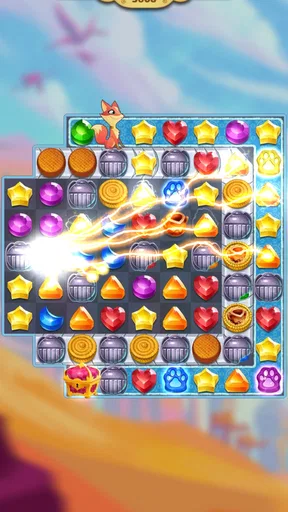
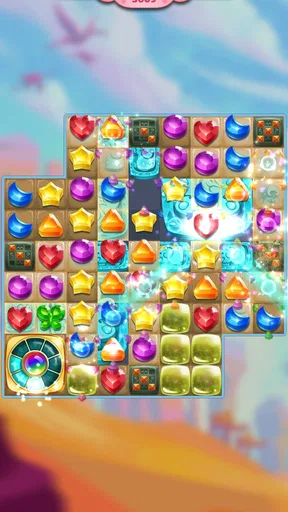

Our Review of Genies & Gems - Match 3 Game
 Analysis by Appyee
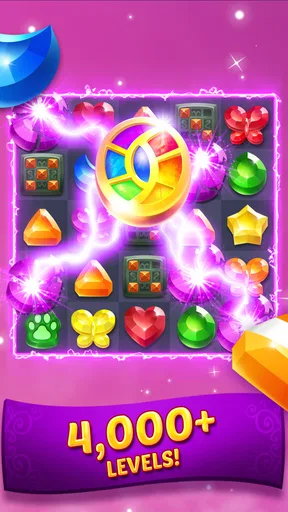
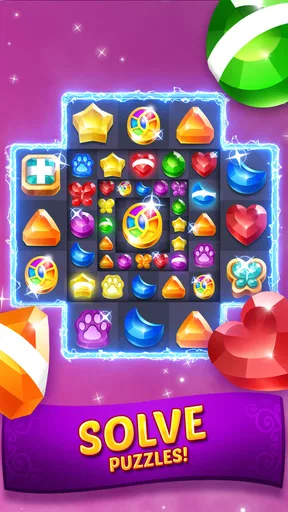
I approached Genies & Gems as the kind of puzzle game you open when you want a quick mental break rather than a long gaming session. It is a free match-three game from Jam City, Inc., built around arranging gems to clear objectives and move through a magical setting. After spending time with it, I found that its appeal is less about reinventing the genre and more about making the familiar format easy to pick up, visually pleasant, and comfortable for short bursts.
That makes the main decision fairly simple: if you enjoy casual puzzle games and like having a steady stream of levels to work through, this is an inviting choice. If you want deep strategy, a completely offline experience, or a game that never nudges you toward optional spending, you should think more carefully before committing. The basic play is approachable, but the long-term experience depends on how much patience you have for repeating attempts and managing the limits built into free-to-play design.
What to consider before choosing a match-three game
My first test with a game like this is how quickly it explains itself. Genies & Gems performs well here because the central action is immediately familiar: swap or arrange matching gems, create clears, and work toward the level objective. You do not need a complicated tutorial or previous knowledge of the story world. This is useful when you are playing with one hand during a commute, waiting for an appointment, or taking a short break between tasks.
The second criterion is whether the puzzle layer offers enough variation to stay interesting. Matching identical pieces is enjoyable for a while, but a good game needs objectives that make me think about the board instead of simply making the most obvious move. In this title, I found myself paying more attention to the order of my moves as levels became less forgiving. That shift matters: the game works best when I treat each board as a small problem to solve, not as a reflex exercise.
I also look at how much control the player has over progress. A free game can be perfectly enjoyable, but lives, retries, boosters, or other forms of pacing can change the experience. I prefer to know whether a title rewards careful play or expects me to spend when a difficult stage stops me. Genies & Gems is best approached with the understanding that its free entry point is generous for trying the game, while optional purchases can become relevant if you want to maintain momentum without waiting or repeating a level.
Finally, I consider the audience. The game carries an Everyone content rating, so it is suitable for a broad audience in terms of age classification. That does not automatically mean every child will enjoy it, though. Younger players may appreciate the colorful presentation, while adults may be more interested in the compact challenges and the satisfaction of clearing a stubborn board. For family use, I would still keep an eye on in-app purchases, especially if the device is shared.
How the basic loop feels in everyday use
A realistic use case is a ten-minute pause during a busy day. I can open the game, complete a board or make meaningful progress, and put it away without needing to remember a complicated control scheme. That short-session quality is one of its strongest practical advantages. It does not demand the attention of a role-playing game, and it is less repetitive than a simple endless runner when I want a little decision-making.
My advice is to begin each level by scanning the entire board instead of immediately making the first available match. Look for moves near the bottom or around blocked areas, because clearing space there can create useful cascades above. I also try not to spend a special move simply because it is available. Saving a powerful combination for the point where the objective is concentrated often makes the difference between finishing comfortably and needing another attempt.
That habit reveals an important trade-off. The game is easy to understand, but not always easy to play well. Its accessible rules can hide a growing demand for planning. Someone who only wants effortless matching may eventually find the later challenge irritating, while a player who enjoys optimizing a limited board will probably appreciate the extra thought.
Where Genies & Gems wins
The clearest strength is its low barrier to entry. I did not have to learn a complex interface before reaching the enjoyable part. The magical theme gives the familiar gem-matching format a distinct identity, and the presentation helps the individual levels feel connected rather than like unrelated puzzles. That matters when I am deciding whether to keep returning after the first few sessions.
Its broad reach is also meaningful. The game has passed 10 million installs and holds a 4.7 average from around 387 thousand ratings, which suggests that its blend of casual pacing and match-three mechanics has found a substantial audience. Those figures do not guarantee that it will suit me personally, but they do indicate that this is an established game rather than an obscure experiment with an uncertain level of support.
I particularly like the way the format fits fragmented time. A longer console or mobile adventure often punishes interruptions because I lose context or waste a portion of a session getting back into the controls. Here, the board itself tells me what needs attention. I can play while sitting on a train, during a lunch break, or at home when I have only a few spare minutes. The same quality makes it a reasonable first puzzle game for someone who does not normally play games.
Another advantage is the balance between luck and decision-making. Match-three boards naturally include chance, but I still feel that careful choices matter. When I pause to identify the best area to clear, I have more influence over the result than I would in a purely random puzzle. This gives the game enough texture to support repeated attempts without turning every level into a long planning exercise.
Small habits that improve difficult boards
One useful approach is to prioritize the level objective rather than chasing the biggest visual effect. A large cascade can be satisfying, but it is not always the move that completes the task. If the board asks me to clear a particular area or collect a certain result, I focus on opening access to that target first. This prevents a common mistake: spending several turns creating attractive matches that do not move the actual objective forward.
I also watch for opportunities created by the board’s shape. A match near an edge may be less valuable than one that opens the center, while a move at the bottom can cause several pieces to fall and produce follow-up matches. These are not complicated techniques, but they turn the game from casual tapping into a more deliberate puzzle routine. For players who feel stuck, slowing down before every move is often more useful than immediately looking for a purchase or a retry.
A third tip is to treat failed attempts as information. Instead of repeating the same opening, I note which area became the bottleneck and change my first few moves around it. This is especially helpful for people who dislike spending on boosters. It will not remove the role of chance, but it gives each attempt a purpose and makes the free route feel less passive.
The game is also a good fit for people who want a gentle sense of progression without learning a large world. Its puzzle structure gives me a clear next step, and the magical setting adds enough flavor to make the journey more inviting. I would recommend it to a casual player who wants something more involving than scrolling but less demanding than a competitive game.
Where the free model changes the experience
Genies & Gems is free to download, which makes trying it straightforward. The trade-off is that it includes in-app purchases ranging from $0.99 to $119.99 per item. I do not see that as a reason to reject the game automatically, but it does affect how I would use it. I would start with a firm personal rule: play normally first, and only consider an optional purchase if I understand exactly what problem it solves.
For me, the healthiest way to approach the game is as a collection of short puzzles, not as a task that must be completed immediately. If a level becomes frustrating, I would close the app and return later rather than turning impatience into a spending decision. That approach also makes the game feel more relaxed, because a difficult board becomes a temporary obstacle instead of a demand to maintain a perfect streak.
Parents and anyone sharing a phone should be especially deliberate about purchase settings. The Everyone rating speaks to the content category, not to how easily a player might be tempted by optional items. I would make sure the device owner controls purchases and explain that the game is free to start but not necessarily free of every optional cost.
When another puzzle style may fit better
The usual alternatives in this category tend to fall into a few groups. Some focus on very short, almost mindless rounds. Others emphasize story and character progression. A third group is built around competition, timed play, or leaderboards. Genies & Gems sits most comfortably between the first two: it keeps the controls simple while giving the matching journey a magical identity and enough level-based challenge to encourage continued play.
If I wanted a purely relaxing experience with little pressure, I might prefer a puzzle game designed around open-ended play rather than level completion. If I wanted serious strategic depth, I would look for a title where every move has a larger tactical consequence and where the board is less dependent on matching patterns. Genies & Gems is not the choice I would make for either extreme. Its strength is its middle ground.
Competitive players may also find it limited as a primary game. The appeal here is personal progress through puzzles, not proving that I am better than another player in a live match. Someone who needs rankings, direct opponents, or fast reactions should investigate a different category. This game is more suitable when I want to solve at my own pace and stop whenever real life interrupts.
There is also a difference between choosing this game and choosing a premium puzzle title. A paid game may offer a clearer cost structure, while this free model lets me try the core experience before deciding whether it deserves a place on my phone. That lower entry barrier is valuable, but the presence of optional purchases means I need more self-control than I would with a single-payment game.
Device compatibility is fairly broad: the current version is 62.124.101-07281013 and requires Android 7.0 or later. That makes it accessible on many older Android devices, although actual comfort will still depend on the phone’s screen, performance, and available storage. I would check the device before installing if I were using an especially old handset, but the operating-system requirement itself is not demanding by modern standards.
The practical cost of switching from another match-three game
Moving to Genies & Gems is easy if I am simply looking for another casual board-clearing game. The controls and basic logic are familiar, so I can begin without rebuilding my understanding of the genre. The real switching cost is not learning the mechanics; it is deciding whether I enjoy this particular presentation and pacing more than the game already on my phone.
If I have invested a lot of time in another title, I should expect a short adjustment period. The objectives may encourage a different order of play, and the way I use special moves may not transfer perfectly. I would give it several sessions before judging it, paying attention to whether I am thinking about the board or merely repeating the same routine. That distinction tells me more than the first impression.
There is also a psychological switching cost. A new game can make me want to rush through early progress, especially when levels feel easy at first. I recommend resisting that urge. The better test is whether the game remains enjoyable when I play slowly, accept a failed attempt, and avoid treating optional purchases as part of the normal solution. If it still feels satisfying under those conditions, it is probably a good match for my habits.
Players who are concerned about storage, battery use, or mobile data should make their decision based on how the app behaves on their own device. I would install it over a reliable connection, try a few sessions, and observe whether it fits comfortably into my phone routine. Those practical checks are more useful than assuming every Android device will deliver the same experience.
My recommendation for different kinds of players
I recommend Genies & Gems to anyone who wants a friendly, magical match-three game for short sessions and gradual puzzle progress. It is particularly suitable for casual players, newcomers to mobile games, and people who enjoy looking for a better move without needing a complicated rulebook. The Everyone rating also makes it a broadly approachable option, provided adults supervise optional purchases on shared devices.
I would be more cautious about recommending it to players who dislike free-to-play pacing, become frustrated by repeated attempts, or want a one-time purchase with no temptation to spend more. I would also point competitive players toward a game built around direct competition, and deep puzzle fans toward a more demanding strategy-focused alternative. Genies & Gems succeeds because it is accessible, not because it pushes the genre to its most complex edge.
Jam City, Inc. has made a game that understands the value of an immediate, readable puzzle. Its established audience is reflected in the approximately 55 thousand written reviews, and the game remains free to start. I found the best experience came from treating it as a small daily diversion: scan the board, prioritize the objective, accept that some attempts will fail, and return later instead of forcing progress.
In the end, I would install it when I wanted a polished-feeling match-three routine with a magical wrapper and enough challenge to keep the familiar format from becoming completely automatic. I would skip it if my main priority were competition, deep strategy, or a purchase model with no optional spending. For everyone in between, it is an easy game to try and a worthwhile one to keep when its relaxed, level-by-level rhythm matches the way you like to play.
Verdict
Strengths of Genies & Gems - Match 3 Game
- Bright, polished visuals make the board easy to read.
- Short levels are convenient for quick gaming sessions.
- Frequent events add variety beyond the regular level map.
- Helpful boosters can make difficult puzzles more manageable.
- The game is simple to learn for casual match-3 players.
Limitations of Genies & Gems - Match 3 Game
- Some levels rely heavily on random tile layouts.
- Energy limits can interrupt longer play sessions.
- Progress may feel slow without using boosters or purchases.
- Later stages can become repetitive despite changing objectives.
- Ads and optional purchases may feel intrusive to some players.
Other Releases by Jam City, Inc.
View All
Bubble Shooter: Panda Pop!
Puzzle4.7

Cookie Jam™ Match 3 Games
Puzzle4.6

Harry Potter: Hogwarts Mystery
Adventure4.6

Cookie Jam Blast™ Match 3 Game
Puzzle4.5
Similar Picks in This Category
View All
Block Blast!
HungryStudio4.8

Braindom: Brain Games Test
Lahana Game Studio4.6

AMAZE!
CrazyLabs LTD4.6

Sudoku - Classic Sudoku Puzzle
Oakever Games4.7

Art Puzzle - Puzzle Games
Easybrain4.8

Amaze GO!
Oakever Games4.9
Frequently Asked Questions
What is Genies & Gems - Match 3 Game?
Genies & Gems is a match-3 puzzle adventure in which you swap colorful gems to create combinations, clear obstacles, and help a genie recover stolen treasures. The game combines traditional tile-matching levels with a light story, animated characters, boosters, and map-based progression. Each stage usually introduces a different objective, so success depends on planning moves rather than simply matching as quickly as possible.
How do you play Genies & Gems?
Gameplay is based on matching three or more identical gems by moving adjacent pieces across the board. Larger combinations can create special gems or powerful boosters that clear rows, columns, or groups of tiles. Levels may ask you to collect specific items, remove obstacles, or reach a target score within a limited number of moves. As you advance, puzzles become more complex and require careful use of power-ups.
Is Genies & Gems free to download and play?
Genies & Gems can generally be downloaded and played for free, but it includes optional in-app purchases. These purchases may provide extra lives, coins, boosters, or other advantages that can help when a level becomes difficult. You can progress without paying, although waiting for lives to refill or replaying challenging stages may take more time. Check your device’s store settings if you want to restrict purchases.
Can Genies & Gems be played offline?
Some basic puzzle gameplay may remain available without a constant internet connection, but online access can be required for certain features. Events, advertisements, cloud synchronization, rewards, updates, and in-app purchases may not work correctly while offline. Availability can also depend on the version installed and the device being used. For the most complete experience, it is best to launch the game with a stable connection.
Is Genies & Gems suitable for children?
Genies & Gems is easy to understand and offers colorful, family-friendly puzzle gameplay, making it accessible to many younger players. However, parents should be aware that the game may contain advertisements, optional purchases, and mechanics designed to encourage continued play. Age ratings and available content can vary by region and platform. Reviewing parental controls and disabling unauthorized purchases is recommended before allowing children to play.
Play our best games!


